Blue Passion Flower (Passiflora caerulea)
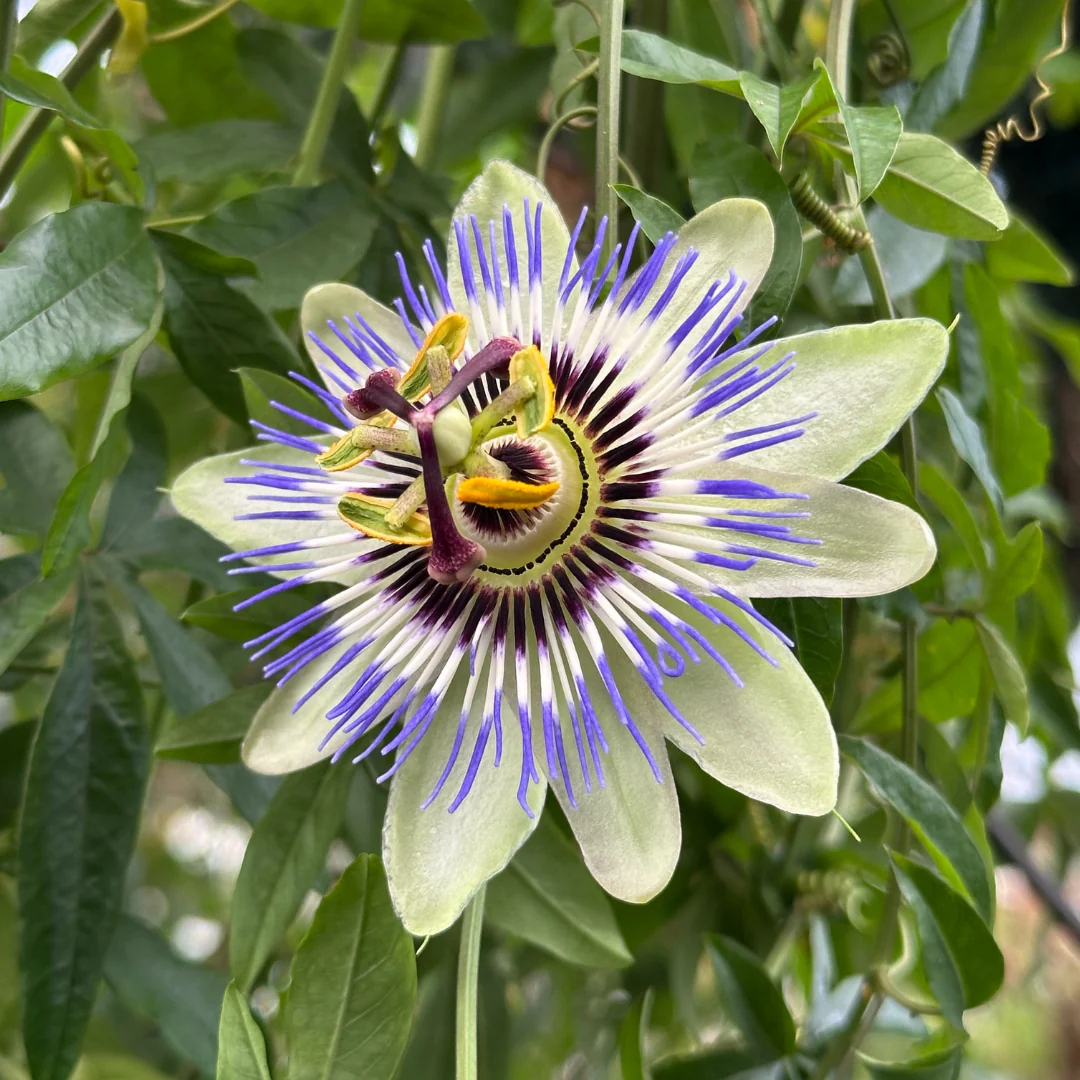
Blue Passion Flower blooms from early summer to early fall with attractive 3” white flowers that have a ring of showy blue, white and purple filaments. This vigorous climber has shiny, palmate leaves with twining tendrils to attach it to a trellis, fence or arbor. It is an ideal plant to use as a cross pollinator for Passiflora incarnata ‘Maypop’ as it flowers in the summer and there is always abundant pollen available. ‘Maypop’ requires a pollinator to produce fruit. Hardy to zone 7, it will die back to the ground and return in the spring. In New England, we have had plants survive for many years when grown up against a foundation where there is some protection.
Original: $19.95
-70%$19.95
$5.98Blue Passion Flower (Passiflora caerulea)
Blue Passion Flower blooms from early summer to early fall with attractive 3” white flowers that have a ring of showy blue, white and purple filaments. This vigorous climber has shiny, palmate leaves with twining tendrils to attach it to a trellis, fence or arbor. It is an ideal plant to use as a cross pollinator for Passiflora incarnata ‘Maypop’ as it flowers in the summer and there is always abundant pollen available. ‘Maypop’ requires a pollinator to produce fruit. Hardy to zone 7, it will die back to the ground and return in the spring. In New England, we have had plants survive for many years when grown up against a foundation where there is some protection.
Product Information
Product Information
Shipping & Returns
Shipping & Returns
Description
Blue Passion Flower blooms from early summer to early fall with attractive 3” white flowers that have a ring of showy blue, white and purple filaments. This vigorous climber has shiny, palmate leaves with twining tendrils to attach it to a trellis, fence or arbor. It is an ideal plant to use as a cross pollinator for Passiflora incarnata ‘Maypop’ as it flowers in the summer and there is always abundant pollen available. ‘Maypop’ requires a pollinator to produce fruit. Hardy to zone 7, it will die back to the ground and return in the spring. In New England, we have had plants survive for many years when grown up against a foundation where there is some protection.