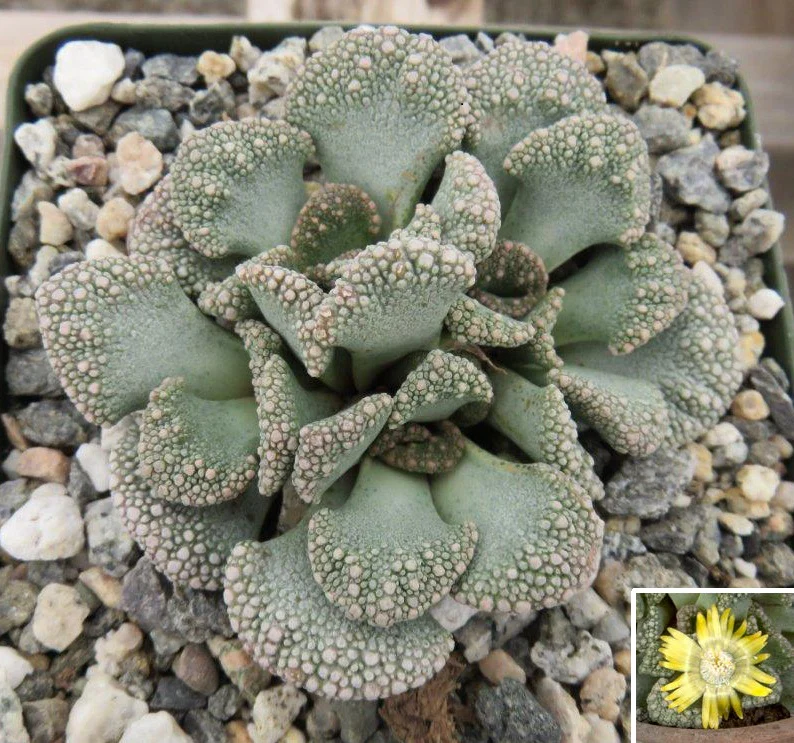
Limestone Living Rocks (Titanopsis calcarea)
This rare succulent originates in South Africa and it’s considered a mimicry plant; a plant that takes on the appearance of the substrate in which it grows. The stubby, bluish-gray, 1” leaves have unusual warty protrusions on the tips of each leaf in colors ranging from white, yellow, gray, red or blue. Small yellow flowers emerge in fall and winter. It’s a clump-forming succulent that can reach 4” across but it remains very short only 2” tall. Grow in well-drained soil in full sun. The botanical name means “resembling limestone.”
Original: $14.95
-70%$14.95
$4.48More Images
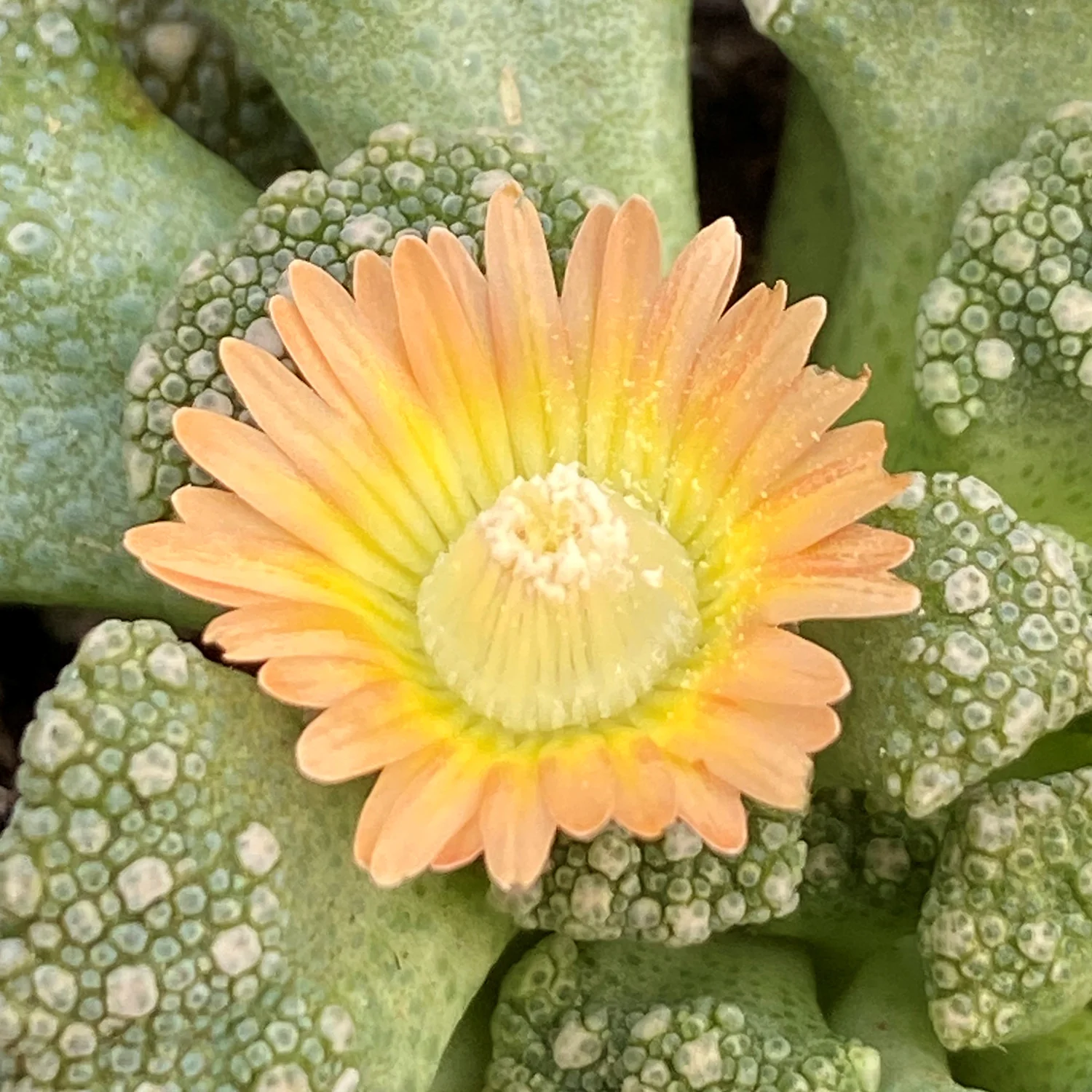
Limestone Living Rocks (Titanopsis calcarea)
This rare succulent originates in South Africa and it’s considered a mimicry plant; a plant that takes on the appearance of the substrate in which it grows. The stubby, bluish-gray, 1” leaves have unusual warty protrusions on the tips of each leaf in colors ranging from white, yellow, gray, red or blue. Small yellow flowers emerge in fall and winter. It’s a clump-forming succulent that can reach 4” across but it remains very short only 2” tall. Grow in well-drained soil in full sun. The botanical name means “resembling limestone.”
Product Information
Product Information
Shipping & Returns
Shipping & Returns
Description
This rare succulent originates in South Africa and it’s considered a mimicry plant; a plant that takes on the appearance of the substrate in which it grows. The stubby, bluish-gray, 1” leaves have unusual warty protrusions on the tips of each leaf in colors ranging from white, yellow, gray, red or blue. Small yellow flowers emerge in fall and winter. It’s a clump-forming succulent that can reach 4” across but it remains very short only 2” tall. Grow in well-drained soil in full sun. The botanical name means “resembling limestone.”